The Evolution Beyond Monolithic Web Architecture
In the traditional monolithic web paradigm, content management, database queries, and frontend layout rendering are tightly coupled within a single server environment. Platforms such as standard WordPress, Drupal, or legacy CMS installations manage both the content creation backend and the user-facing presentation layer simultaneously. While this unified structure served early web iterations well, high-growth enterprises today face severe limits when scaling across multiple digital endpoints, maintaining complex frontend performance benchmarks, and protecting server databases from public-facing web vulnerabilities.
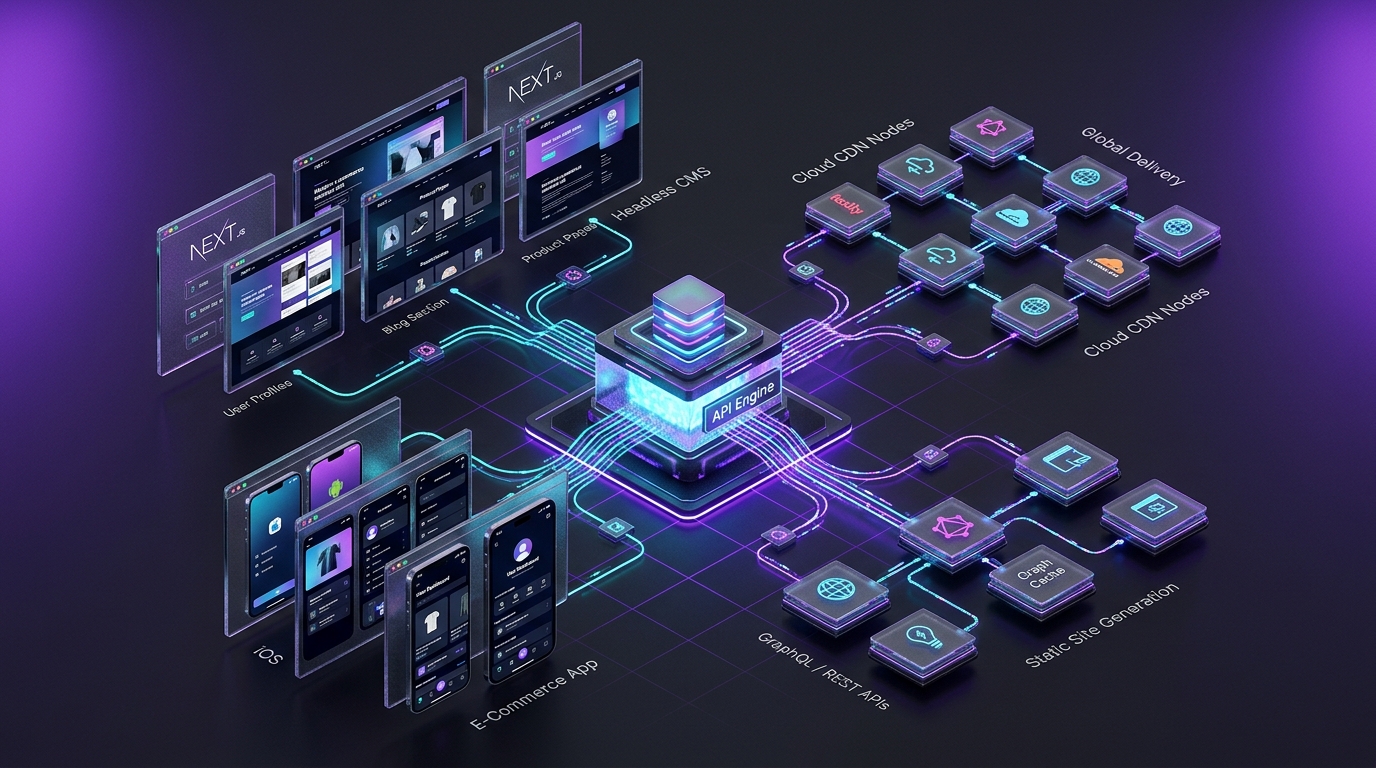
Decoupled web architecture breaks this structural dependency by isolating content management from presentation. A headless CMS operates purely as a content repository, exposing structured content through high-performance RESTful or GraphQL APIs. Front-end engineers build client experiences using modern frontend frameworks like Next.js, React, or Vue.js, consuming API payloads without being restricted by backend template engines. Engaging specialized Headless CMS Development Services enables enterprise organizations to achieve sub-second content rendering, multi-channel publishing capabilities, and bank-grade application security across all client touchpoints.
Core Architectural Pillars of Decoupled Web Systems
Adopting a decoupled infrastructure requires a modern web stack built around performance, security, and developer productivity:
- API-First Content Engines: Platforms like Strapi, Sanity, Contentful, or headless WordPress manage digital assets, rich text, and complex schema relationships without generating HTML markup.
- Modern JavaScript Frontend Frameworks: Single-page applications (SPAs) and Server-Side Rendered (SSR) architectures—built on Next.js, Nuxt.js, or SvelteKit—deliver dynamic, app-like user experiences.
- GraphQL & REST Data Fetching: Frontend components request exact data attributes, eliminating over-fetching and minimizing payload transfers across mobile and desktop connections.
- Edge Delivery & CDNs: Static site generation (SSG) pre-renders pages at build time, distributing HTML assets globally across Content Delivery Networks (CDNs) for zero-latency page loads.
Enterprise Benefits: Speed, Multi-Channel Scaling, and Security
Deploying decoupled systems via professional Headless CMS Development Services provides scalable advantages for enterprise web engineering:
- Omnichannel Content Distribution: Write content once in a unified headless hub and publish simultaneously across web portals, native mobile applications, smart displays, and e-commerce checkouts.
- Superior Core Web Vitals: Serving static assets or server-rendered React components eliminates dynamic database queries per page view, yielding top Largest Contentful Paint (LCP) and Interaction to Next Paint (INP) scores.
- Enhanced Enterprise Security: Decoupling the presentation layer removes public access to database query paths and admin login panels, neutralizing common SQL injection and cross-site scripting (XSS) attacks.